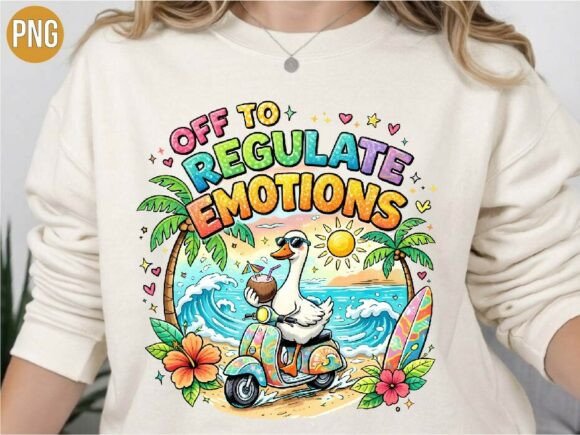
Off to Regulate Emotions Duck PNG Shirt: A Guide to Quality Digital Design
In the fast-paced world of Print on Demand and digital crafting, finding a design that balances humor with technical precision is often harder than it looks. The Off to Regulate Emotions Duck PNG Shirt concept has gained traction because it taps into a universal need for lighthearted emotional management. However, many creators rush into purchasing or using digital assets without fully understanding the technical requirements that separate a amateurish product from a professional one. This guide aims to clarify what you are actually getting with this premium digital file and how to avoid common pitfalls that can compromise your final print quality.
Understanding the Value of High-Resolution Assets
When you download a file labeled as a premium digital design, you are not just buying an image; you are buying the potential for high-quality reproduction. The core of this specific asset is its resolution. Many beginners make the critical mistake of assuming all PNG files are created equal. They are not. A standard web image might be 72 DPI (dots per inch), which looks fine on a screen but appears pixelated and blurry when printed on fabric or ceramic.
This design comes in at 300 DPI, which is the industry standard for crisp, professional printing. Ignoring this detail can lead to wasted materials and unhappy customers. If you attempt to upscale a low-resolution image to fit a t-shirt, the software has to guess the missing pixels, resulting in a muddy, unprofessional appearance. By starting with a file that is already optimized at 300 DPI, you ensure that every feather on the duck and every letter of the text remains sharp, regardless of the product size.
The Transparency Trap: Why Backgrounds Matter
One of the most frequent errors new designers make is overlooking the importance of a transparent background. The Off to Regulate Emotions Duck PNG is provided with a transparent background, but this feature is only useful if your workflow supports it. If you are using basic photo viewers or incompatible software, you might see a white or black box around the duck instead of transparency.
Using a design with a solid white background on a colored t-shirt, for example, results in a large, unsightly square print rather than just the character. This looks cheap and reduces the perceived value of your product. To avoid this, always verify that your design software—whether it is Photoshop, Canva, Cricut Design Space, or Silhouette Studio—properly displays the checkerboard pattern that indicates transparency before you begin your project. If you see a solid color behind the duck, check your layer settings or file compatibility immediately.
Common Missteps in File Handling and Preparation
Receiving a ZIP file can be confusing for those unfamiliar with digital downloads. A common frustration arises when users try to open the ZIP file directly in their design program. This will not work. You must first unzip or extract the folder to access the actual PNG file inside. Failing to do this often leads to error messages and the false assumption that the file is corrupted.
Another overlooked detail is color profile management. While this file is designed for broad compatibility, screens display colors in RGB (Red, Green, Blue), while many printers use CMYK (Cyan, Magenta, Yellow, Key/Black). Although modern POD platforms handle this conversion well, being aware of slight color shifts can save you from surprise results. Always order a sample if you are launching a new product line to ensure the yellow of the duck and the tone of the text match your expectations on the physical material.
Maximizing Versatility Across Products
This design is not limited to apparel. Its high-quality construction makes it suitable for a wide array of creative projects. However, applying the same design logic to every product is a mistake. For instance, placing this graphic on a dark navy mug requires different considerations than placing it on a white cotton t-shirt.
- Apparel: Ensure the design is centered and scaled appropriately for the chest area. For dark garments, consider if your printer supports white underbase printing to keep colors vibrant.
- Stickers and Decals: The clean lines of the duck make it ideal for die-cut stickers. Ensure you leave adequate bleed space if you are cutting these manually or using a cutting machine.
- Home Decor: When using this for pillows or albums, remember that texture affects perception. A 300 DPI file ensures the details remain visible even on textured fabrics like canvas or linen.
By adapting your placement and sizing strategy to each specific medium, you enhance the overall aesthetic appeal. Do not simply stretch the image to fit; maintain the aspect ratio to prevent the duck from looking distorted or elongated.
Who Should Use This Design?
This asset is particularly valuable for small business owners and hobbyists who want to streamline their workflow. Instead of spending hours creating a character from scratch or hiring a costly illustrator, you can leverage this pre-made, high-quality design. It is perfect for:
- Print on Demand Sellers: Quickly list products on platforms like Etsy, Redbubble, or Amazon Merch without worrying about image quality issues.
- Educators and Counselors: The theme of "regulating emotions" makes this a gentle, approachable tool for classrooms or therapy offices when printed on posters or journals.
- Gift Makers: Create personalized items for friends who appreciate mental health awareness wrapped in humor.
Final Checks Before You Create
Before you finalize your purchase or start your next project, take a moment to review your technical setup. Ensure your computer can handle ZIP extraction and that your preferred design application supports high-resolution PNGs. Remember, this is a digital download, meaning no physical item will arrive in the mail. Understanding this distinction prevents confusion and ensures you are prepared to use the file immediately upon receipt.
By paying attention to these details—resolution, transparency, file extraction, and product-specific adaptation—you transform a simple digital file into a professional-grade product. The Off to Regulate Emotions Duck is more than just a trendy graphic; it is a tool for creative expression. Treat it with the technical care it deserves, and it will serve your business or hobby well, delivering consistent quality and customer satisfaction.